Press release · May 2026
Sutton Barcelona, the world’s first nightclub renovated with 3D concrete printing
Aridditive manufactured 340 functional elements off-site —sofas, stairs, bars and the DJ booth— shortening a five-month renovation to seven weeks and reducing concrete consumption by 45%.
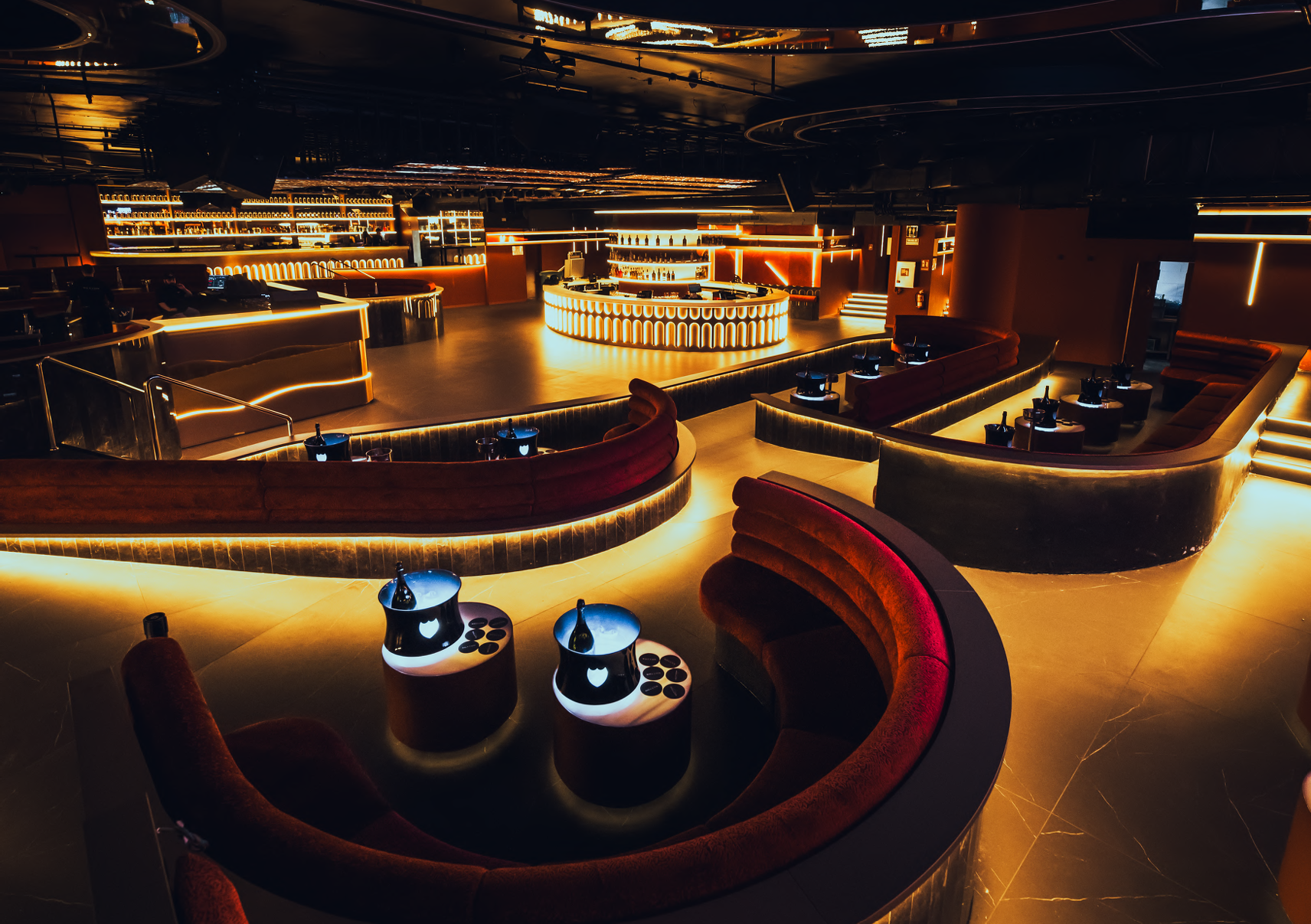
Final result of the renovated interior with 3D printed concrete elements.
The emblematic Sutton Barcelona venue has become a pioneering case in the application of 3D concrete printing to the renovation sector.
Its full renovation, executed in seven weeks, demonstrates the potential of digital manufacturing compared with the approximately five months that a traditional approach would have required.
The project was conceived as a highly complex intervention in a nightlife venue, where time, durability, design and on-site coordination were critical factors.
Project figures
A five-month renovation executed in seven weeks
Redesigning construction to make it executable
From the digital model to off-site manufacturing
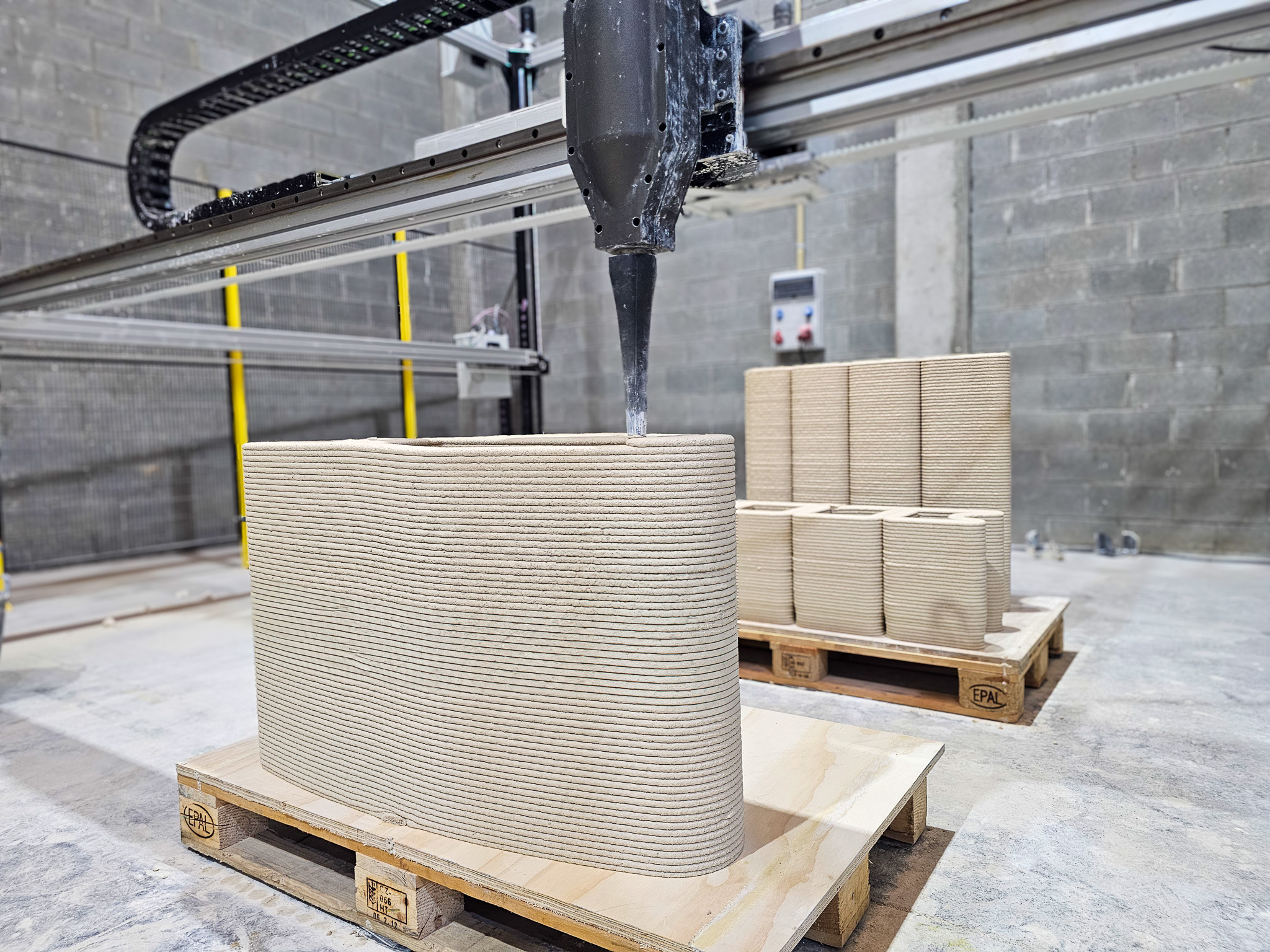
To address the challenge, the project was reorganized around a more industrialized process based on digitalization, prefabrication and off-site manufacturing. Within this framework, Aridditive translated the project’s geometries into pieces that could be manufactured using its 3D concrete printing technology.
The process included a prototyping and validation phase, allowing solutions to be tested before final execution. This approach made it possible to fully decouple manufacturing from the construction process, producing the elements in advance and enabling their later installation within a seven-week period.
The pieces were then integrated into the final design using wood cladding, upholstery and Porcelanosa ceramic finishes, while respecting the aesthetics of the venue. The use of precast concrete also provides a key advantage in this type of environment: its fire-resistant behaviour.
Project video
From 3D printing to the finished space
The video shows how digital manufacturing made it possible to turn a complex design into real, transportable and installable pieces for a demanding commercial renovation.
Sustainability and efficiency
45% less concrete and around 50 tonnes of CO₂ avoided
The elements were manufactured using 60 tonnes of concrete, compared with approximately 110 tonnes that would have been required through conventional processes. This reduction of around 45% in material use has made it possible to avoid approximately 50 tonnes of CO₂ emissions associated with production and transport.
The sustainability of the project is not limited to the material used. It also lies in the way of building: manufacturing only what is needed, reducing waste, decreasing on-site uncertainty and moving part of the complexity into a controlled production environment.
Manufacturing and final result
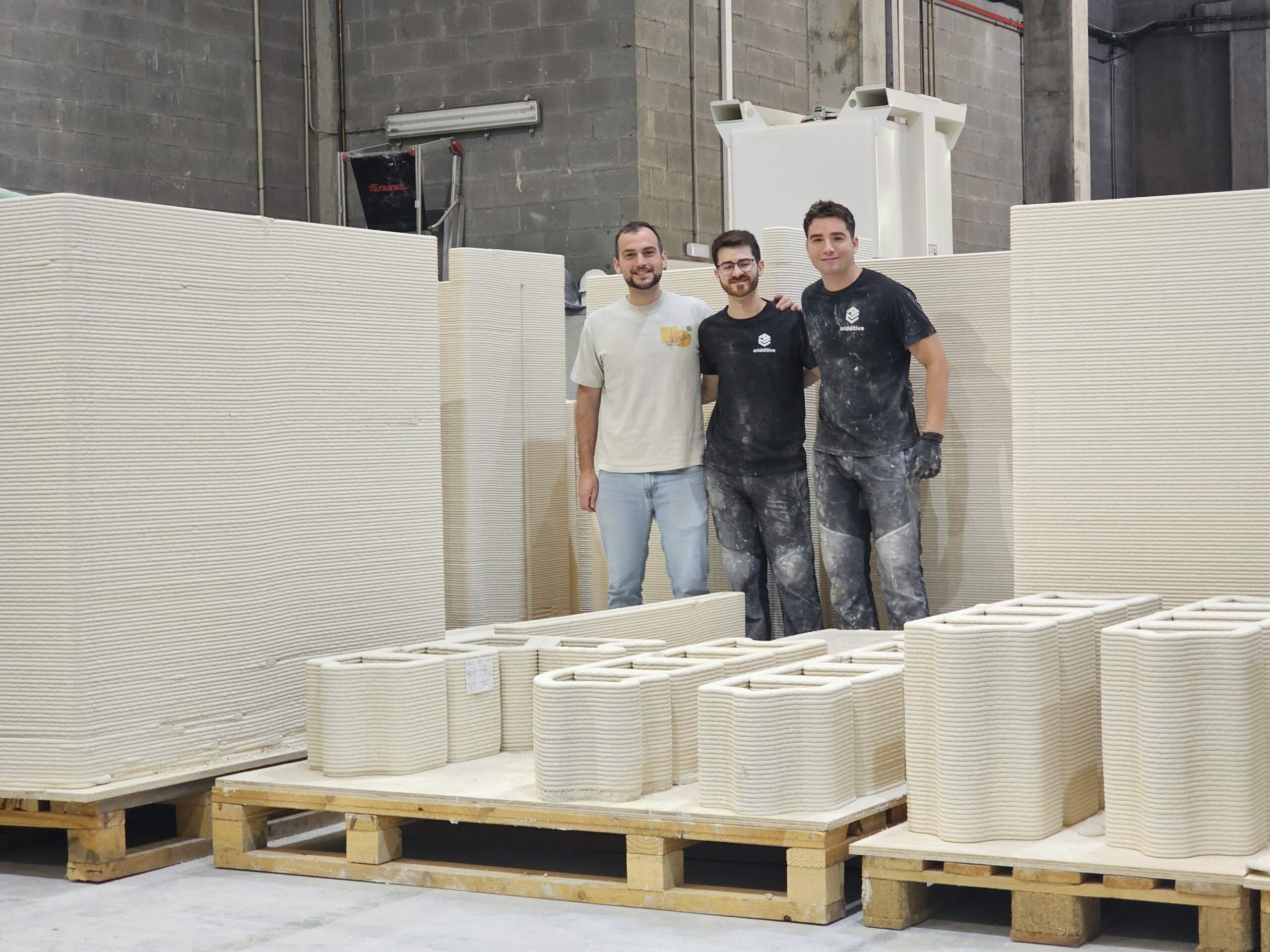
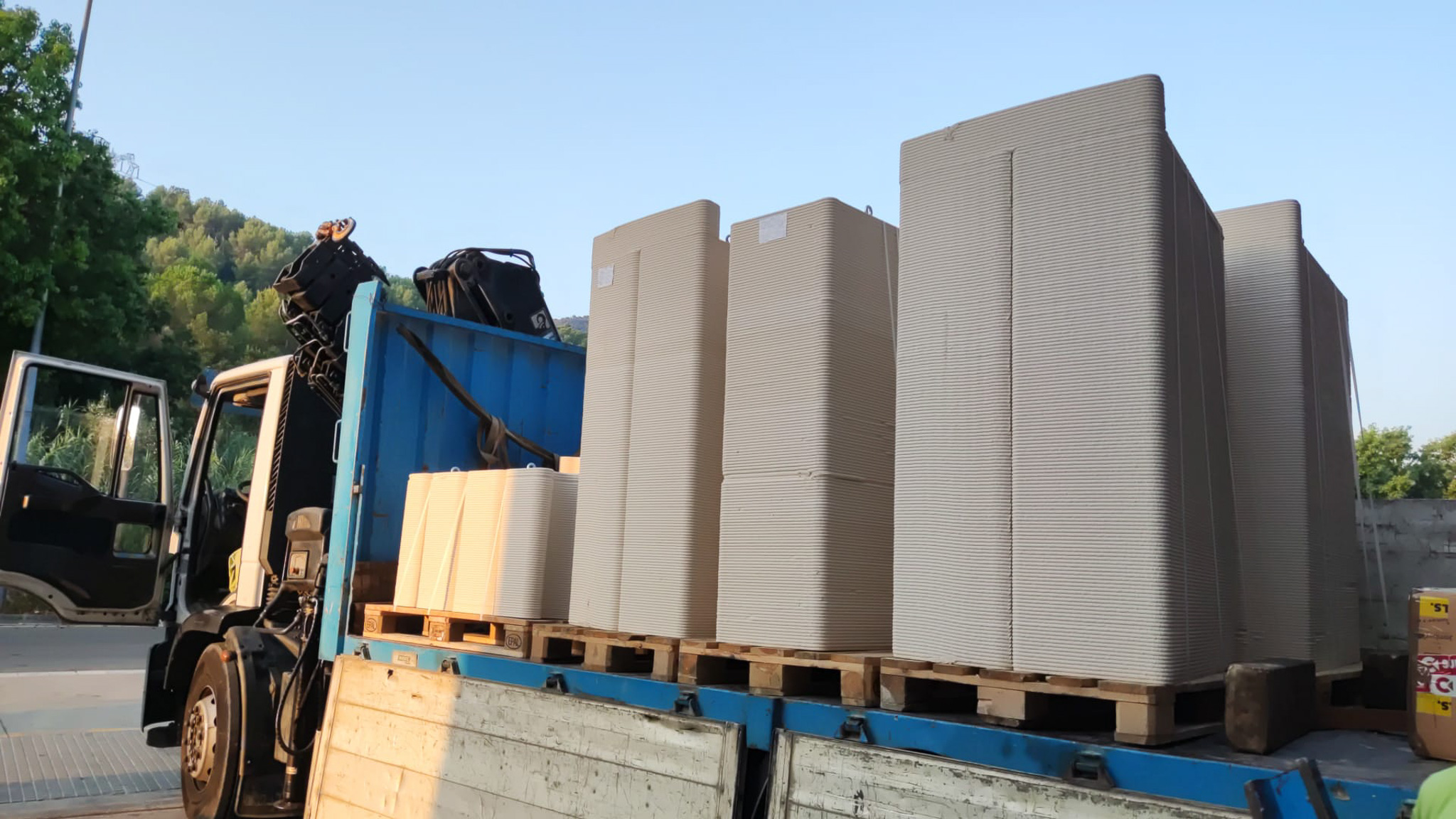
From printed pieces to the finished interior
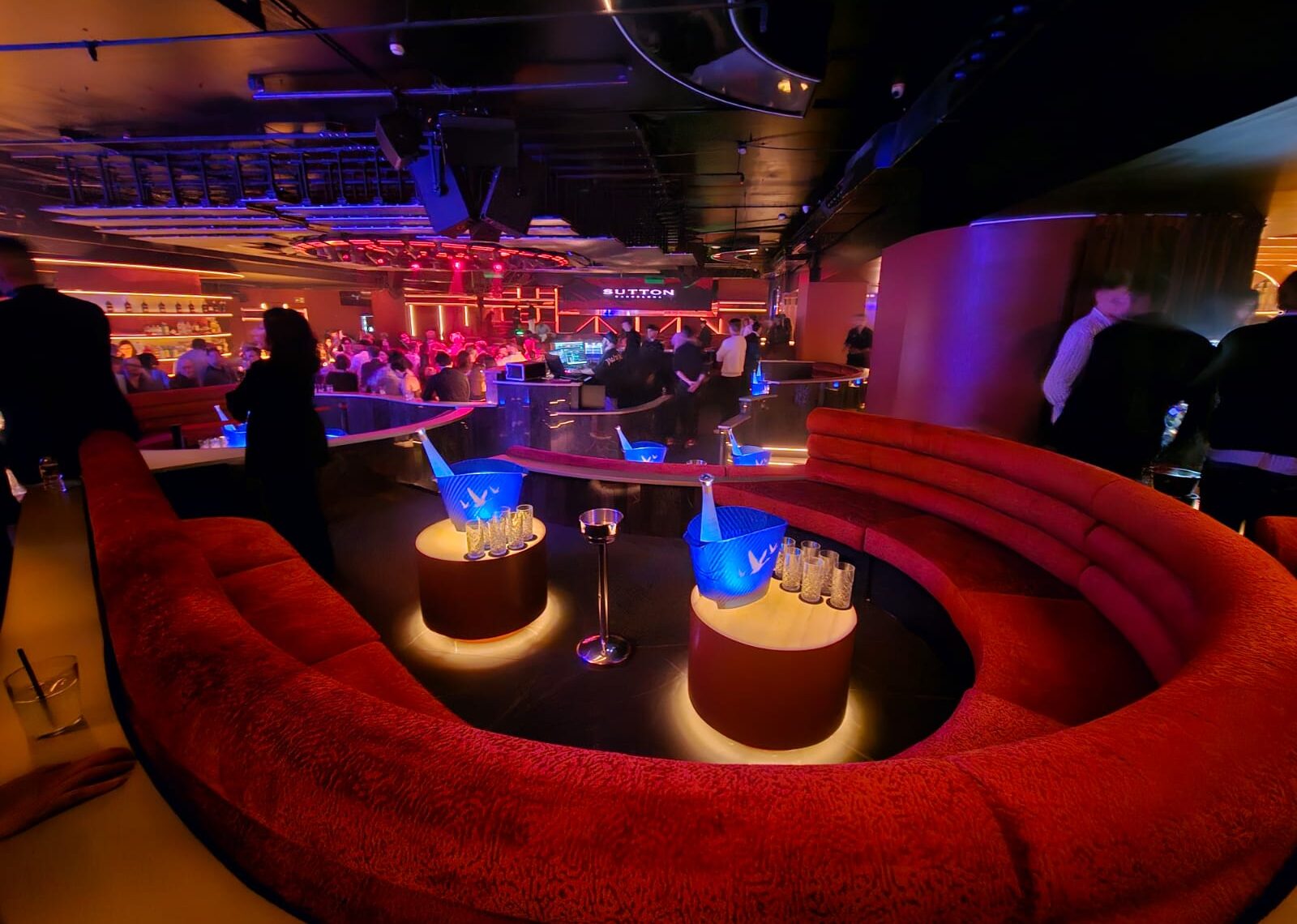
A new way to execute complex renovations
More precision, more control and more predictability on site
The Sutton case shows a shift in the way complex interior design and renovation projects can be approached. Execution no longer depends exclusively on on-site interpretation, but can rely on digital manufacturing processes that provide greater precision, control and predictability.
This model opens up new opportunities for hotels, restaurants, clubs, retail spaces, corporate headquarters and commercial environments where formal uniqueness must coexist with tight schedules and controlled execution.
Technology and material
3D printed concrete for a high-intensity use environment
Industrial collaboration has been key to developing a material adapted to 3D printing, capable of meeting the technical, durability and safety requirements demanded by a high-intensity use environment.
The project highlights the importance of connecting technology, materials and execution to bring innovative solutions from development to real application in complex projects.
Discover the full project
The process, images and video of Sutton Barcelona
We have prepared a project page with the details of each phase: design, digitalization, manufacturing, transport, installation, sustainability and final result.
About Aridditive. Aridditive is a company specialized in 3D concrete printing for architecture, interior design and urbanism, based in Sant Vicenç dels Horts, Barcelona. Born as a spin-off from CIM UPC and the Universitat Politècnica de Catalunya, the company works to digitalize construction through advanced manufacturing technologies.
Press contact. info@aridditive.com · +34 938 33 60 45