Optimized geometry
CIM UPC developed the topology optimization and structural calculation of the pedestrian bridge.

A lightweight infrastructure demonstrator developed through topology optimization, structural calculation and Design for Additive Manufacturing, produced by Aridditive using 3D concrete printing.
The project explored the potential of additive manufacturing in concrete to produce more efficient structural elements, reducing material through topology optimization and translating complex geometries into a manufacturable construction system.
CIM UPC researchers developed the topology optimization, structural calculation, connection design and technical validation of the concept. Aridditive contributed Design for Manufacturing, adapting the geometry to the real 3D concrete printing process and defining a production strategy compatible with manufacturing, handling and assembly constraints.
The video summarizes the full workflow: digital development, path planning, section printing, post-reinforcement, installation and assembly of the pilot pedestrian bridge.
Aridditive’s work focused on transforming the structural concept into a printable system: sections, toolpaths, printing orientation, layer continuity and production feasibility.
CIM UPC developed the topology optimization and structural calculation of the pedestrian bridge.
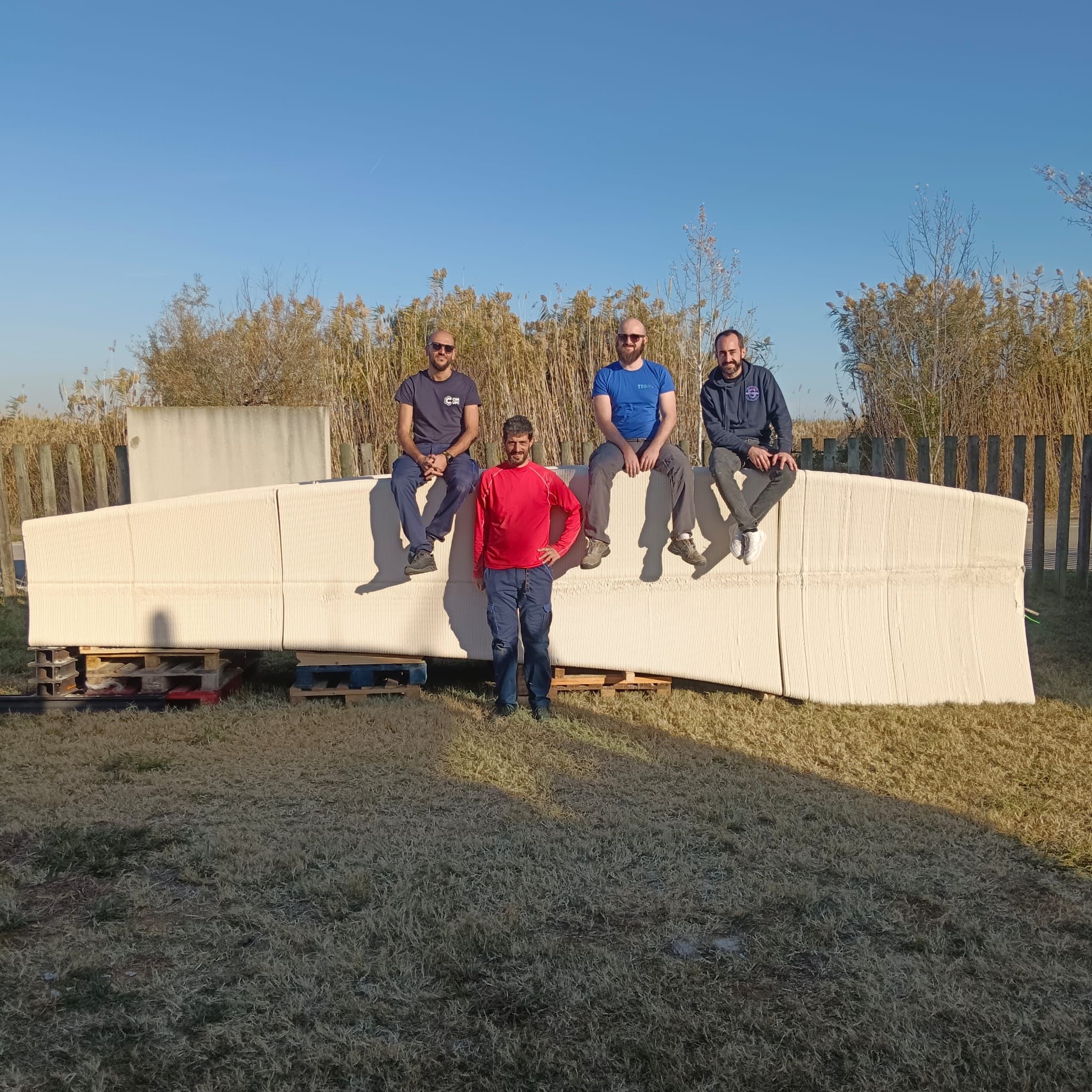
The geometry was divided into four printable modules, considering manufacturing, handling and assembly.
Alternative toolpath strategies were evaluated to ensure continuity, layer stability and geometric accuracy.
Aridditive printed the sections and prepared the subsequent reinforcement, stiffening and assembly process.
The digital phase made it possible to study path planning alternatives and adapt the structural geometry to a real 3D concrete printing process.
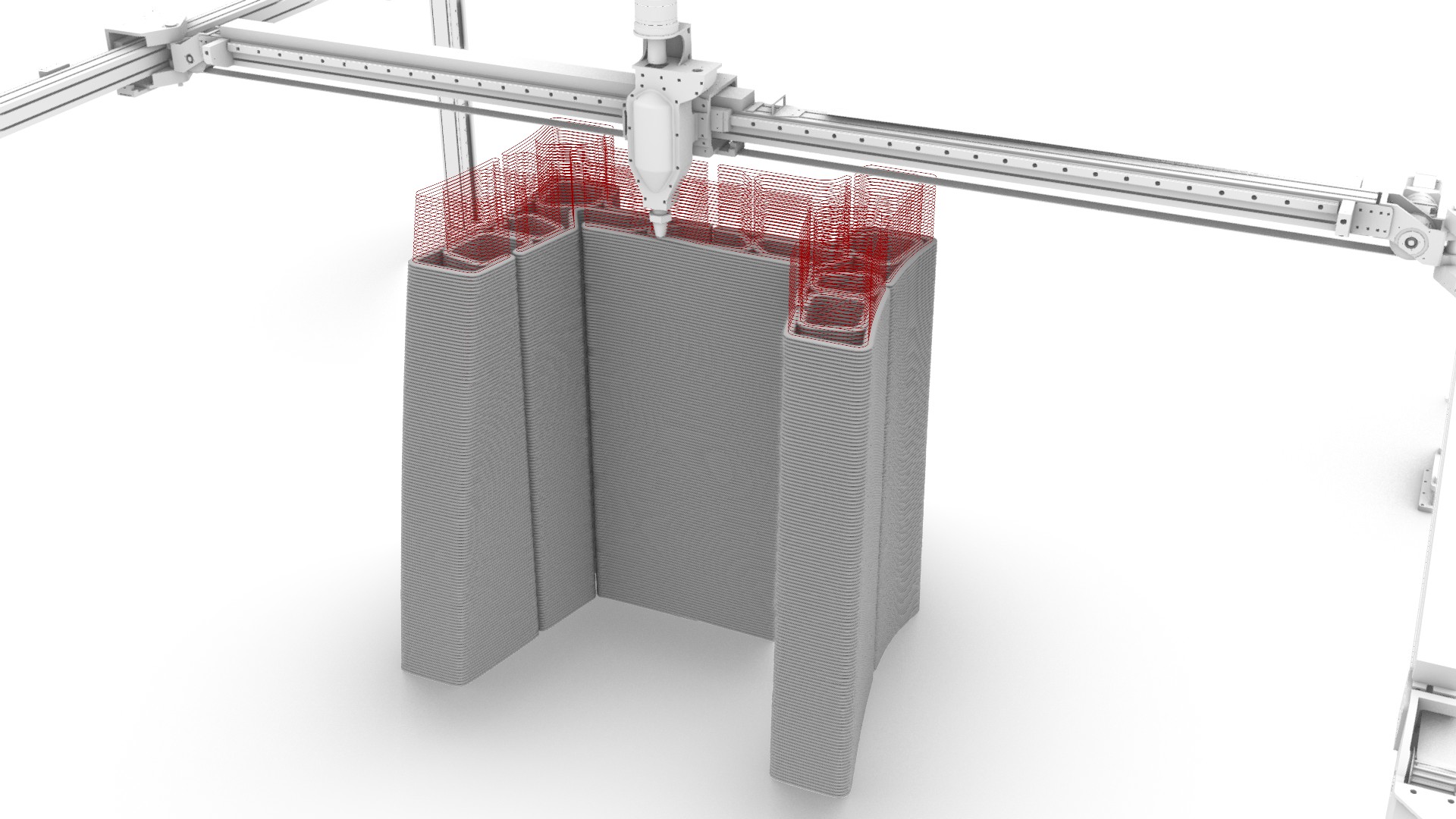
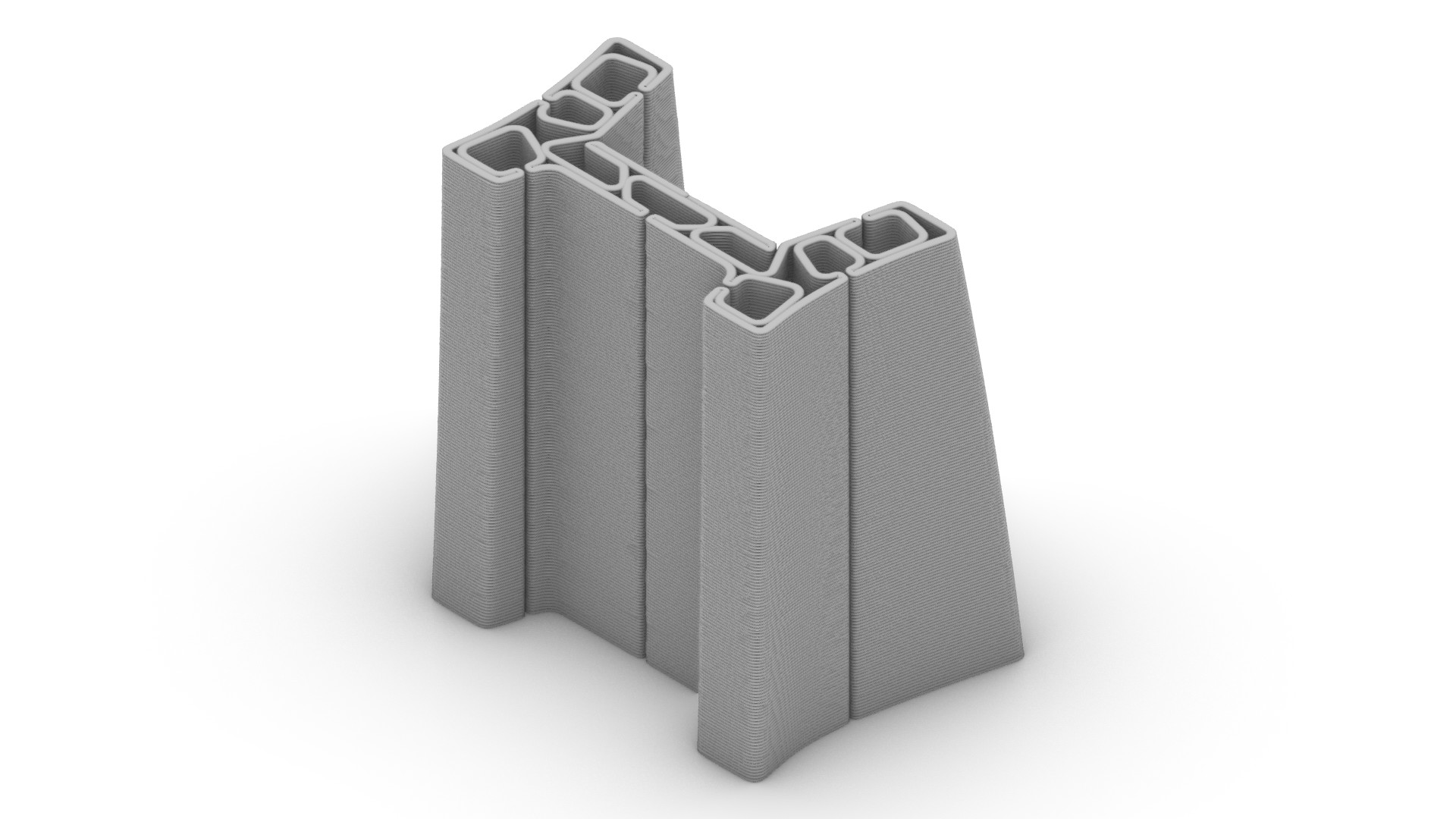
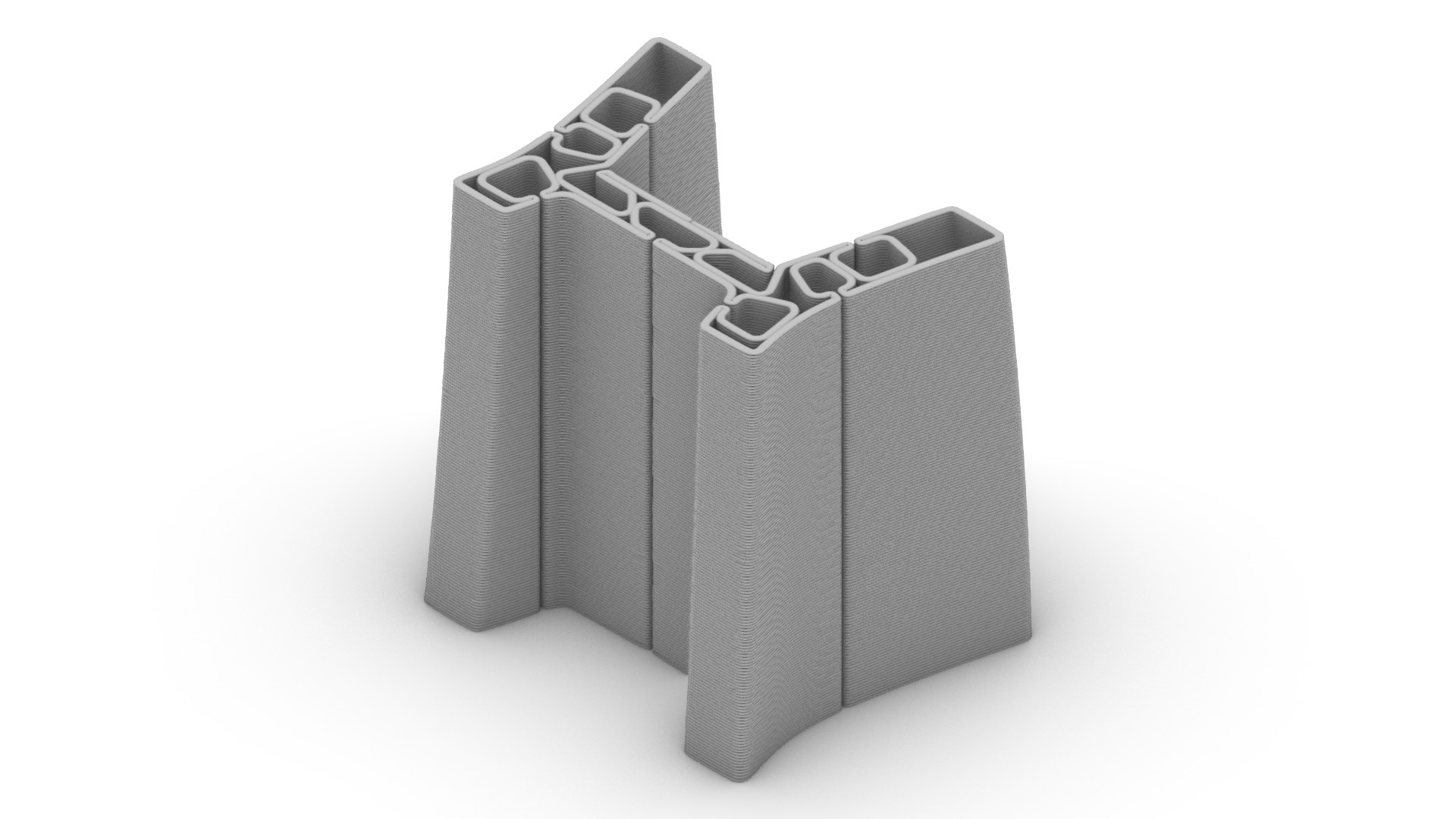
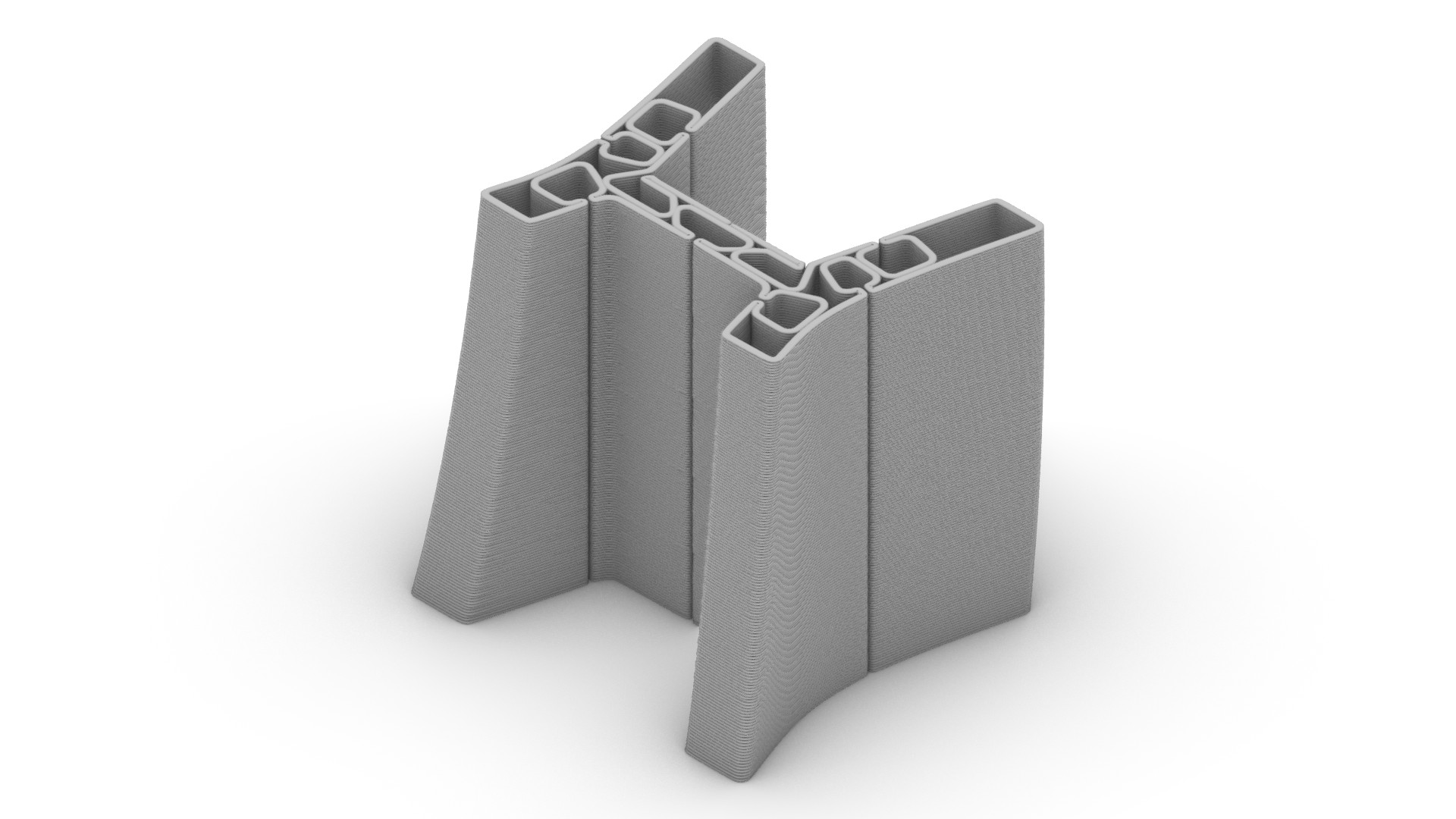
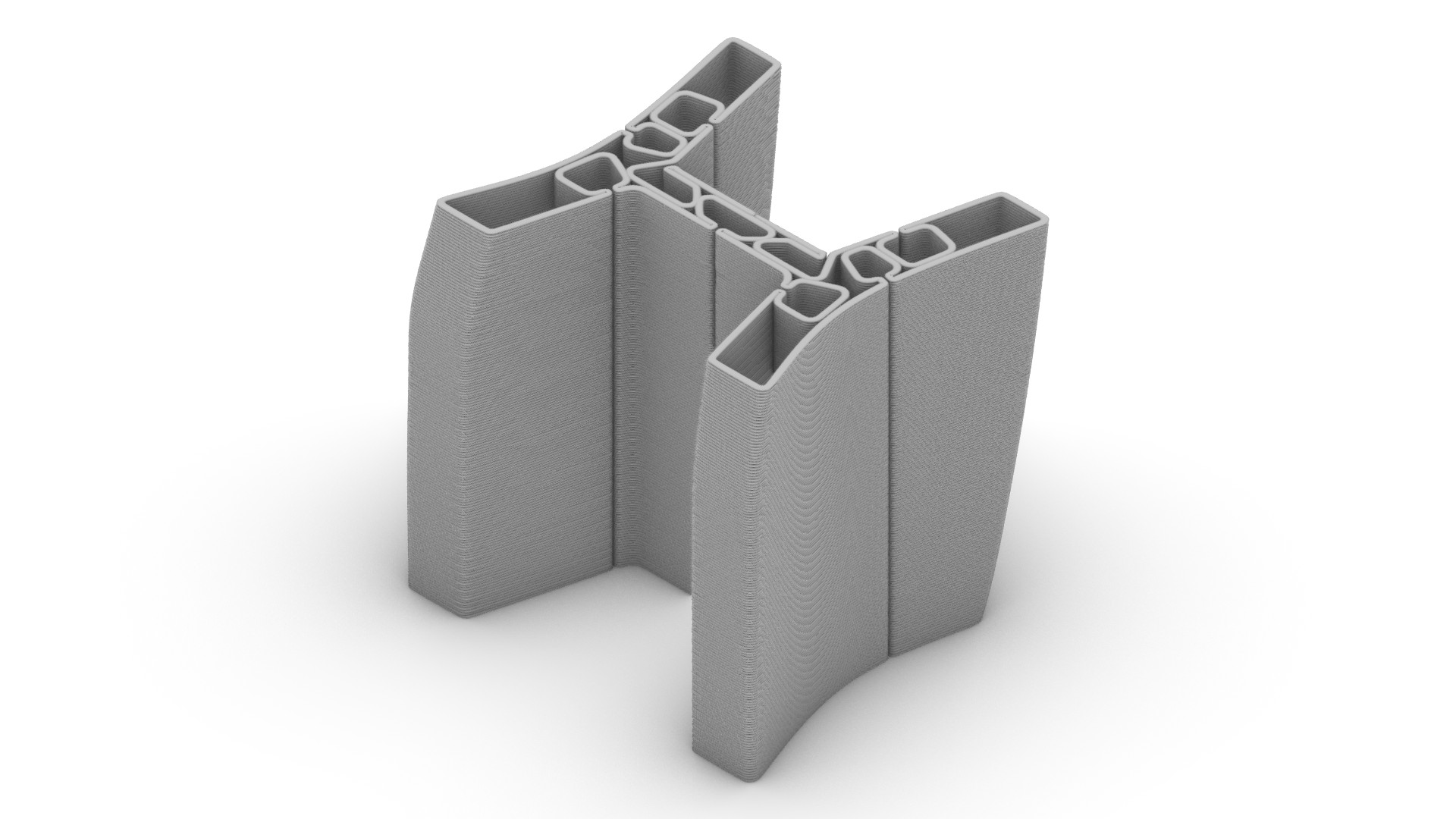
The bridge sections were manufactured using Aridditive’s 3D concrete printer. The process made it possible to materialize a non-conventional geometry designed to reduce mass and concentrate material where it was structurally needed.
Printing was approached as part of a complete construction system: module manufacturing, geometric control, post-reinforcement, integration of connection points and final assembly of the four sections.
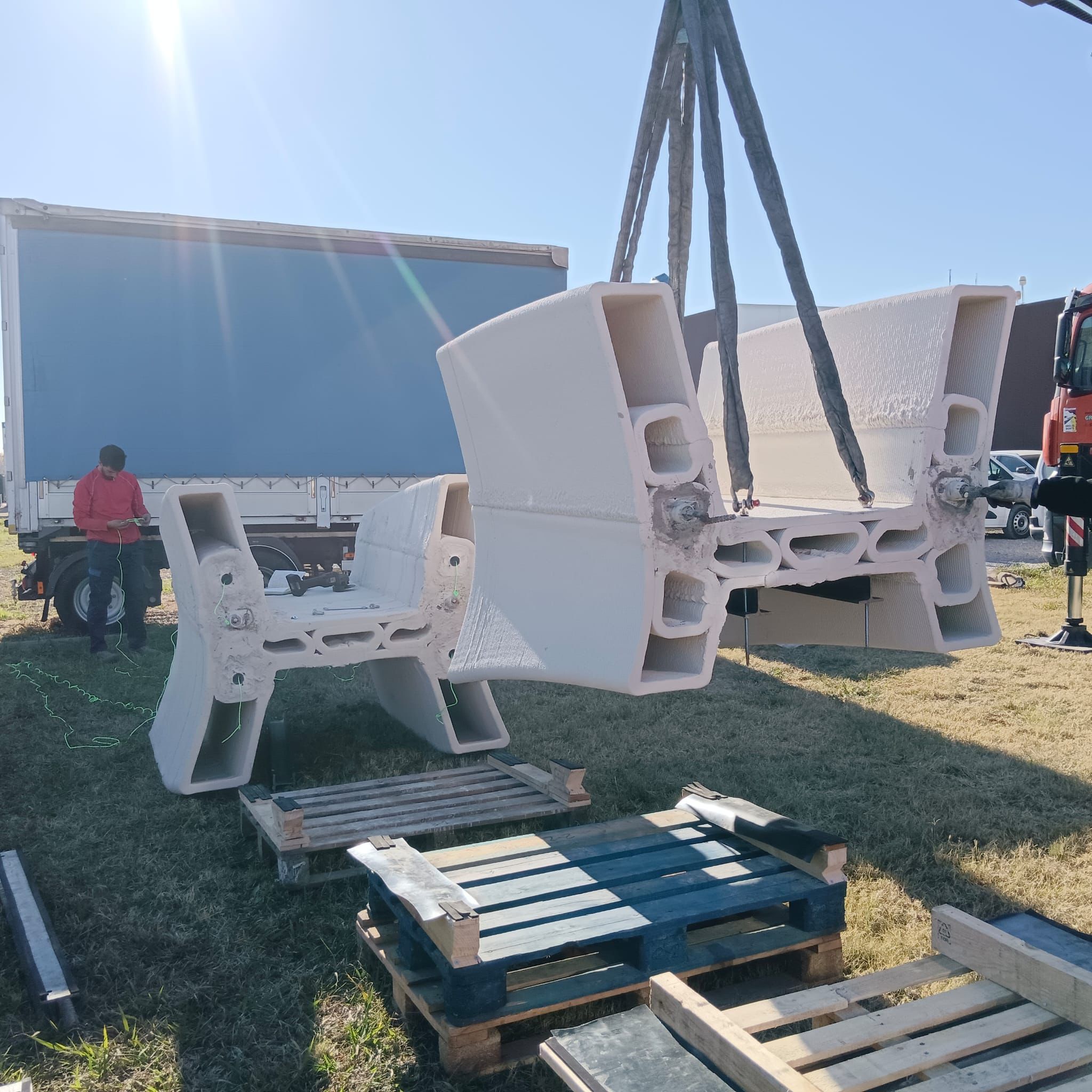
After printing, some areas of the sections were reinforced through steel post-reinforcement and localized concreting of structural ribs, integrating the connection points required for bridge assembly.
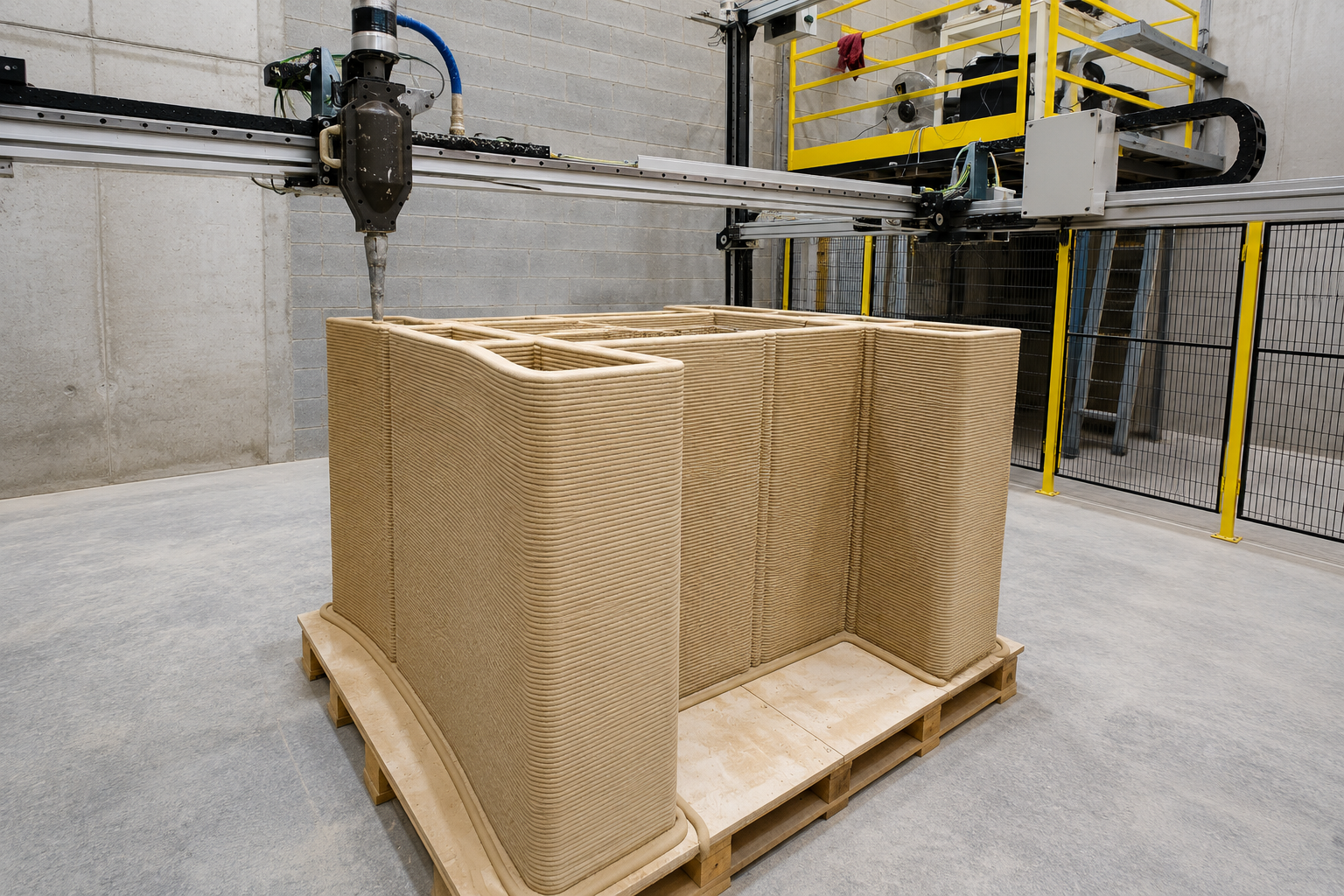
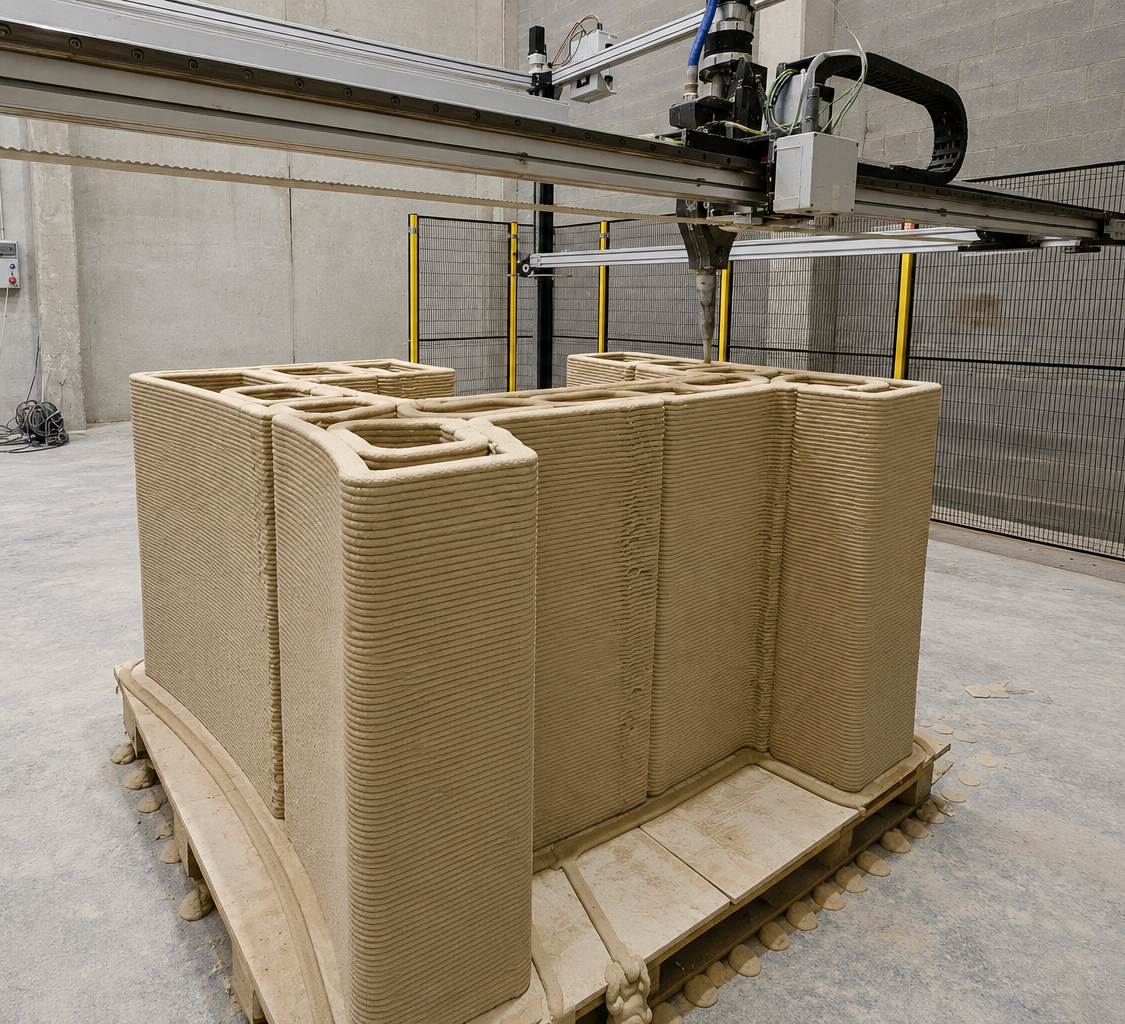
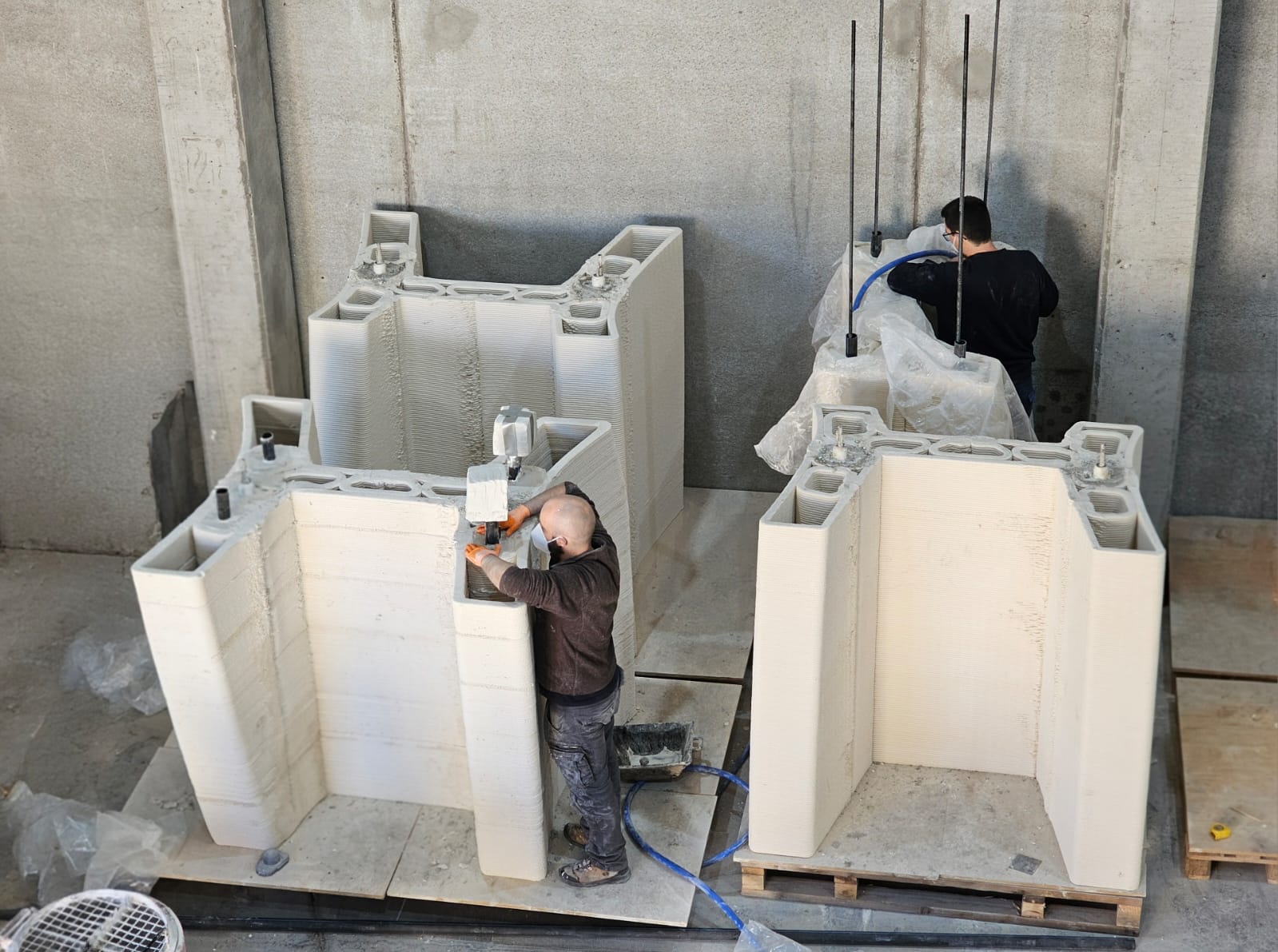
The bridge was developed through four printed and subsequently assembled sections. This strategy made it possible to manufacture complex geometries in a controlled environment, facilitate module handling and prepare the final assembly of the system.
The post-processing phase incorporated passive steel reinforcement, localized concreting and connection systems between modules to ensure force transfer, geometric alignment and continuity of the assembled element.
The project culminated with the installation of the sections and the assembly of the pilot pedestrian bridge, validating the workflow between structural design, additive manufacturing and modular assembly.
“The challenge was not only to print a complex geometry, but to turn an optimized structural solution into a manufacturable, reinforceable, handleable and assemblable system.”Aridditive · Design for Manufacturing in 3D concrete printing
The pilot pedestrian bridge demonstrates how additive manufacturing can be integrated into civil engineering workflows, connecting structural optimization, advanced prefabrication and modular assembly.
The structural geometry makes it possible to place material where it provides resistant value, reducing mass compared with conventional solid solutions.
Adaptation to the printing process turns an advanced design into pieces that are truly manufacturable, controllable and assemblable.
Section-based manufacturing facilitates handling, transport, post-reinforcement and assembly of complex elements in civil works.
The project materializes a complete workflow between structural research and additive manufacturing: topology optimization, structural calculation, connection design, Design for Manufacturing, 3D concrete printing, post-reinforcement and assembly.
For Aridditive, this case represents a direct application of its technology in special structural elements, civil works prototypes and lightweight infrastructure, where geometric precision, material reduction and construction feasibility must be solved together.
At Aridditive, we help turn advanced designs, structural prototypes and special civil works elements into manufacturable pieces through 3D concrete printing.