The company fabricated off-site 340 functional concrete elements for bars, benches, sofas, bleachers, walls and the DJ area, in an intervention that reduces the use of concrete by approximately 45% and avoids around 50 tons of CO₂.
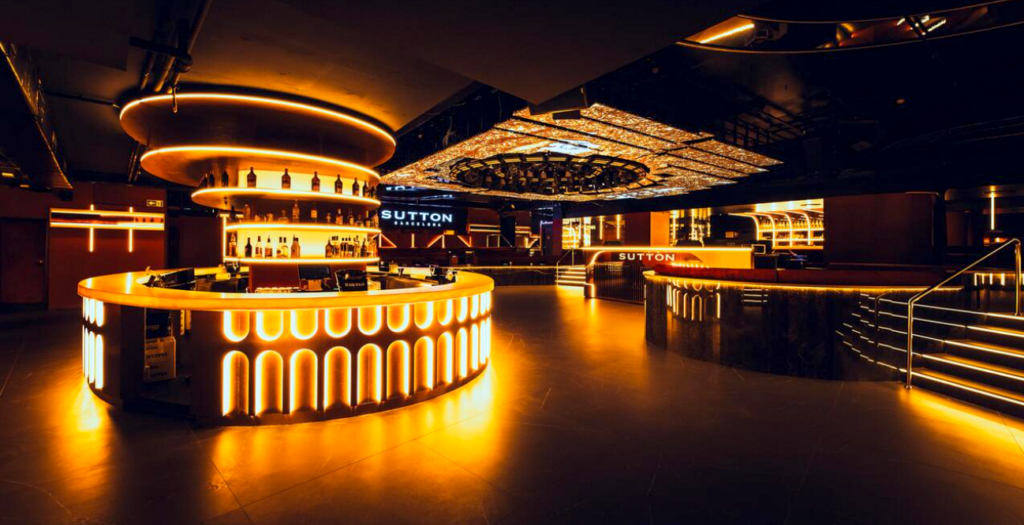
Sutton Barcelona, one of the city’s most renowned nightlife venues, has become the first nightclub in the world to be refurbished using 3D printing in concrete. The intervention, executed during the summer of 2025, demonstrates how digital fabrication can be applied to real commercial refurbishments with high demands on design, schedule, durability and on-site coordination.
The project posed a common challenge in the hospitality sector: transforming an entire space without blocking its activity for months. Compared to a traditional renovation estimated to take about five months, the solution developed made it possible to concentrate the on-site execution in just seven weeks.
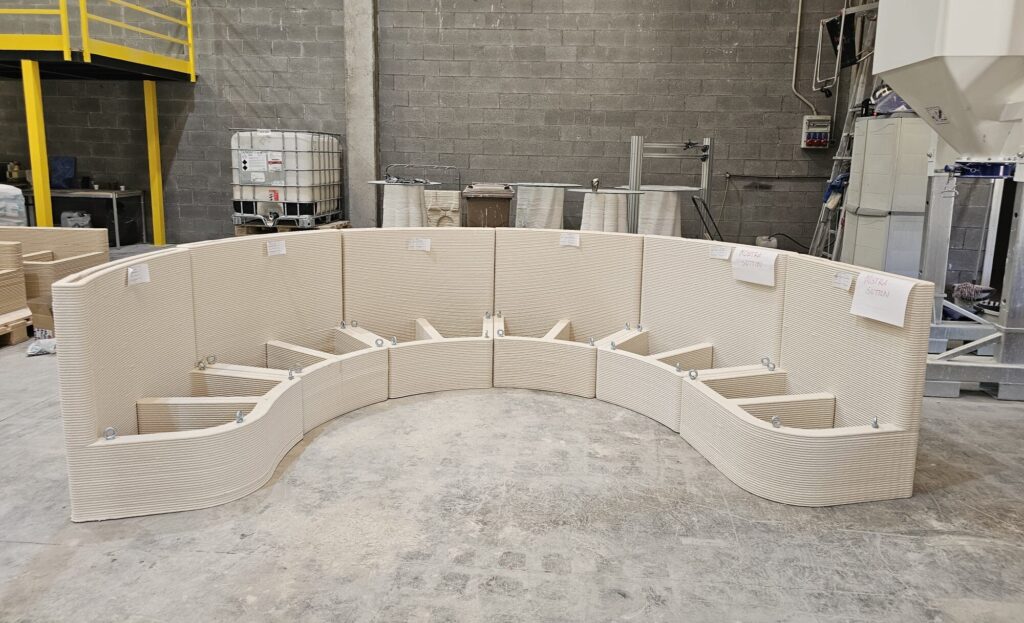
To make this possible, Aridditive manufactured a total of 340 off-site functional elements using 3D concrete printing, including bars, benches, sofas, bleachers, walls, steps and DJ area elements. The parts were produced on-site from the digital model of the project, allowing progress to be made in parallel to the preparation of the venue and reducing reliance on complex manual processes on site.
A complex reform turned into an industrialized process
The interior design of Sutton Barcelona proposed an organic language, with curved geometries and elements integrated into the spatial experience of the club. This type of shapes, difficult to execute in a conventional way within a construction site, were solved through a more industrialized approach: digitalization, prefabrication, pre-validation and on-site assembly.
3D printing in concrete allowed a significant part of the complexity to be transferred to a controlled manufacturing environment. Each part could be designed, produced and prepared before final installation, reducing uncertainty, interferences and lead times on site.
Once installed, the 3D printed elements were integrated with wood, upholstery and ceramic finishes, forming part of the final result of the space. Although many of the pieces are clad or visually integrated, their constructive function is essential: they act as a base for bars, benches, sofas, bleachers, steps and other interior elements subject to intensive use.
Less material, less emissions and more control
In addition to the time reduction, the project represents a significant advance in terms of material efficiency. The elements were manufactured using approximately 60 tons of concrete, compared to an estimated 110 tons with conventional processes.
This reduction of about 45% in the use of concrete has enabled the avoidance of approximately 50 tons of CO₂ associated with production and transportation.
“Digital manufacturing allows us to be more efficient from the source. It is not only about using a material with a smaller footprint, but also about rethinking the construction process to consume fewer resources, reduce waste and manufacture only what is necessary,” explains Roger Uceda, Corporate Director of Aridditive.
The use of precast concrete also brings important advantages in an environment such as a discotheque, where durability, robustness and fire performance are particularly relevant factors.
A new approach for interior design, retail and hospitality
The Sutton Barcelona case demonstrates a new approach to complex commercial renovations. Instead of relying exclusively on manual on-site interpretation and execution, the project relied on a digital flow capable of connecting design, fabrication and assembly.
“The challenge was not only the design, but also being able to execute it in the summer, with limited availability of manpower. 3D printing allowed us to reduce that dependency and ensure project deadlines,” says Arnau Cumelles, CEO of Aridditive.
For Aridditive, Sutton Barcelona represents a direct application of 3D printing in concrete to high-impact interior design. Not as an isolated technological demonstration, but as a real tool to solve a business, construction and design problem: how to execute a singular reform in a very tight deadline, with functional, resistant and off-site manufactured pieces.
The project opens up new possibilities for hotels, restaurants, clubs, retail, corporate headquarters and commercial spaces where formal uniqueness must coexist with tight deadlines, durability and controlled execution.
The complete project, with images, video and details of the design, manufacturing and installation process, can be consulted here:
https://aridditive.com/sutton/